Chenjiagou, the village of Chen-style taiji
The Chen family village on the north bank of the Yellow River, in Henan, and the style of taijiquan that carries the family name.
The village
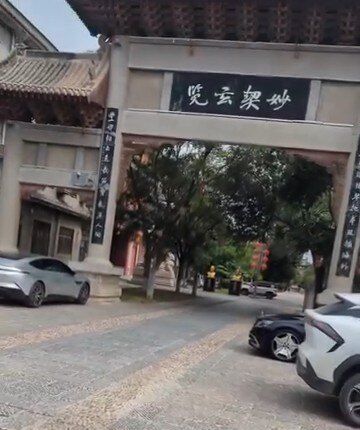
Chenjiagou is in Wen County (溫縣), Jiaozuo City (焦作), Henan Province.
The village is on the north bank of the Yellow River (黃河). The Taihang Mountains (太行山) lie to the north.
The Chen clan came from Hongtong County (洪洞), Shanxi. Chen Bu (陳卜) moved to Wen County early in the Ming dynasty, around 1370. Sources give 1372, 1374, or only "the Hongwu years" (1368–1398).
The clan first settled on low ground that flooded. It later moved about 5 km east to Qingfeng Ridge ("Green Wind Ridge").
陳家溝 means "Chen family ravine". The village was first called Changyang Cun ("Sunshine Village") and took the new name from three deep ravines beside it. Another source links the name to the ditches (溝 gōu) dug against floods.
In 2007 the China Folk Literature and Art Association (中國民間文藝家協會) named Chenjiagou the birthplace of taijiquan.
During the Cultural Revolution, from 1966 to about 1976, most of the village's taijiquan buildings were destroyed and many practitioners were persecuted.
The lineage
-
陳卜 Chen Bu
Brought the Chen clan from Hongtong, Shanxi, to Wen County.
-
陳王廷 Chen Wangting
Courtesy name Zouting (奏庭). He commanded the Wen County garrison under the Ming and guarded merchant caravans in Henan and Shandong. After the Ming fell in 1644 he retired to the village.
The account the Chen family accepts: he joined his military experience to meridian theory and daoyin (導引), and drew on General Qi Jiguang's (戚繼光) manual Jixiao Xinshu (紀效新書), which covers 16 fighting styles. He left seven routines and is credited with the first push-hands (推手 tuīshǒu) exercises.
A competing account says he learned from Jiang Fa (蔣發) and from the Wudang tradition credited to Zhang Sanfeng. The Chen family rejects it.
-
陳長興 Chen Changxing
He condensed the older routines into the two Old Frame (老架 Lǎojià) forms: First Road (一路 Yīlù) and Second Road (二路 Èrlù), the Cannon Fist (炮捶 Pàochuí). People called him "Mr Ancestral Tablet" because he stood so upright.
He taught Yang Luchan (楊露禪; 1799–1872, another source: 1799–1871), the first student from outside the family on record. Yang later founded Yang-style taijiquan and took the art to Beijing.
Tradition tells: Yang came as a servant and watched the training at night, in secret.
-
陳發科 Chen Fake
Great-grandson of Chen Changxing. In 1928 he went to Beijing (then Beiping) at the request of his nephew Chen Zhaopi. Before he left he performed Laojia Yilu as a farewell. Chen Liqing, then a child, remembered: "Chen Fake demonstrated Laojia Yilu."
In Beijing he proved the style in private challenges and lei tai (擂台, platform) fights. His students included Feng Zhiqiang (馮志強), Hong Junsheng (洪均生), Lei Muni and his son Chen Zhaokui.
Tradition tells: He was a sickly boy. At about 14 he overheard relatives doubting him, trained hard for three years and became one of the best in the village.
-
陳照丕 · 陳照奎 Chen Zhaopi · Chen Zhaokui
Chen Zhaopi returned to the village in 1958, aged 65, to revive the family art, and kept teaching through the Cultural Revolution, often in secret.
Chen Zhaokui, Chen Fake's son, brought his father's Beijing method to the village, where people called it Xinjia (新架, New Frame). One source dates his return to teach it to 1974; another says he visited three times, for under two years in all.
-
四大金剛 The Four Jingang
Zhaopi and Zhaokui trained the next generation: Chen Xiaowang (陳小旺, b. 1945), Chen Zhenglei (陳正雷, b. 1949), Wang Xi'an (b. 1944) and Zhu Tiancai. In 1983 the four received government support to teach abroad.
Jingang (金剛) are the guardian figures of Buddhist temples. The same word opens the form's first strike, 金剛搗碓, "Buddha's Warrior Attendant Pounds Mortar".
-
UNESCO
Taijiquan joined the Representative List of the Intangible Cultural Heritage of Humanity.
The frames and the forms
Chen style is "characterized by silk reeling, alternating fast and slow motions, and bursts of power."
Laojia, the Old Frame
Chen Changxing's frame. First Road (Yilu) has 74 movements; Second Road (Erlu) has 44.
Xinjia, the New Frame
The frame Chen Fake taught in Beijing, brought to the village by Chen Zhaokui. Its Yilu has 83 movements; its Erlu has 71.
Erlu, the Cannon Fist
Faster than Yilu, with more emphasis on "explosive power (fa jin) and martial applications".
Xiaojia, the Small Frame
The village's "small frame" line. Chen Liqing practised Xiaojia.
Short forms
Chen Xiaowang created the 38- and 19-posture forms. Chen Zhenglei created the 18-posture Laojia.
A Chenjiagou-affiliated school compares forms training to dripping oil onto parchment: the oil soaks in slowly, layer by layer.
Laojia Yilu: the 74 movements
Other lineages count and name this form differently; Hong Junsheng's Practical Method, for example, uses 81 names. The count of 74 follows the Chenjiagou Laojia standard.
The form opens and closes with 金剛搗碓, the guardian pounding the mortar. The Seven Stars (七星) are the Big Dipper.
- 太極起勢 Beginning of Taiji
- 金剛搗碓 Buddha's Warrior Attendant Pounds Mortar
- 懶扎衣 Lazily Tying Coat
- 六封四閉 Six Sealing and Four Closing
- 單鞭 Single Whip
- 金剛搗碓 Buddha's Warrior Attendant Pounds Mortar repeats no. 2
- 白鶴亮翅 White Crane Spreads Wings
- 斜行 Walking Obliquely
- 摟膝 Brush Knee
- 上三步 Stepping Forward Three Steps
- 斜行 Walking Obliquely repeats no. 8
- 摟膝 Brush Knee repeats no. 9
- 上三步 Stepping Forward Three Steps repeats no. 10
- 掩手肱拳 Hidden Thrust Punch (Covering Hand and Arm Punch)
- 金剛搗碓 Buddha's Warrior Attendant Pounds Mortar repeats no. 2
- 撇身拳 Draping Fist Over Body
- 青龍出水 Green Dragon Emerges from Water
- 雙推手 Double Pushing Hands
- 肘底看拳 Fist Under Elbow
- 倒卷肱 Stepping Back and Wrapping Upper Arms
- 白鶴亮翅 White Crane Spreads Wings repeats no. 7
- 斜行 Walking Obliquely repeats no. 8
- 閃通背 Flashing the Back
- 掩手肱拳 Hidden Thrust Punch repeats no. 14
- 六封四閉 Six Sealing and Four Closing repeats no. 4
- 單鞭 Single Whip repeats no. 5
- 雲手 Cloud Hands
- 高探馬 High Patting on Horse
- 右擦腳 Brushing Right Foot
- 左擦腳 Brushing Left Foot
- 轉身左蹬腳 Turn and Kick with Left Heel
- 上三步 Stepping Forward Three Steps repeats no. 10
- 擊地捶 Pounding the Ground
- 踢二起 Double Jump Kick
- 護心拳 Protect-the-Heart Fist
- 旋風腳 Tornado Foot (Whirlwind Kick)
- 右蹬腳 Kicking with the Right Heel
- 掩手肱拳 Hidden Thrust Punch repeats no. 14
- 小擒打 Small Catch and Hit
- 抱頭推山 Embracing Head and Pushing Mountain
- 六封四閉 Six Sealing and Four Closing repeats no. 4
- 單鞭 Single Whip repeats no. 5
- 前招 Forward Move
- 後招 Backward Move
- 野馬分鬃 Parting the Wild Horse's Mane
- 六封四閉 Six Sealing and Four Closing repeats no. 4
- 單鞭 Single Whip repeats no. 5
- 玉女穿梭 Fair Maiden Works Shuttles
- 懶扎衣 Lazily Tying Coat repeats no. 3
- 六封四閉 Six Sealing and Four Closing repeats no. 4
- 單鞭 Single Whip repeats no. 5
- 雲手 Cloud Hands repeats no. 27
- 擺腳跌叉 Swing Foot and Drop Down (Splits)
- 金雞獨立 Golden Rooster Stands on One Leg
- 倒卷肱 Stepping Back and Wrapping Upper Arms repeats no. 20
- 白鶴亮翅 White Crane Spreads Wings repeats no. 7
- 斜行 Walking Obliquely repeats no. 8
- 閃通背 Flashing the Back repeats no. 23
- 掩手肱拳 Hidden Thrust Punch repeats no. 14
- 六封四閉 Six Sealing and Four Closing repeats no. 4
- 單鞭 Single Whip repeats no. 5
- 雲手 Cloud Hands repeats no. 27
- 高探馬 High Patting on Horse repeats no. 28
- 十字單擺蓮 Cross-Hands Single Lotus Kick (the source translates it as "Crossed Feet")
- 指襠捶 Punch the Groin
- 白猿獻果 White Ape Presents Fruit
- 單鞭 Single Whip repeats no. 5
- 雀地龍 Dragon on the Ground
- 上步七星 Step Forward to Form the Seven Stars
- 退步跨虎 Step Back to Ride the Tiger
- 轉身雙擺蓮 Turn Back and Double Lotus Kick
- 當頭炮 Head-On Cannon (Head-On Blow)
- 金剛搗碓 Buddha's Warrior Attendant Pounds Mortar repeats no. 2
- 太極收勢 Closing of Taiji
Names and order:
Erlu, the Cannon Fist: the 44 movements
Show the 44 movements of Erlu
- 預備勢 Preparation
- 金剛搗碓 Buddha's Warrior Attendant Pounds Mortar
- 懶扎衣 Lazily Tying Coat
- 六封四閉 Six Sealing and Four Closing
- 單鞭 Single Whip
- 翻花舞袖 Overturning Flowers and Waving Sleeves
- 護心拳 Protect the Heart Fist
- 斜行 Walking Obliquely
- 回頭金剛搗碓 Turn Back and Pound Mortar
- 撇身捶 Draping Fist Over Body
- 指襠 Point to the Groin
- 斬手 Chopping Hand
- 翻花舞袖 Overturning Flowers and Waving Sleeves repeats no. 6
- 掩手肱拳 Covering Hand and Arm Punch
- 腰攔肘 Waist-Blocking Elbow
- 大肱拳小肱拳 Big and Small Arm Punches
- 玉女穿梭 Jade Maiden Works Shuttles
- 倒騎龍 Riding the Dragon Backwards
- 掩手肱拳 Covering Hand and Arm Punch repeats no. 14
- — Name being checked
- 獸頭勢 Beast Head Pose
- 披架子 Wearing a Frame / Splitting Frame
- 翻花舞袖 Overturning Flowers and Waving Sleeves repeats no. 6
- 掩手肱拳 Covering Hand and Arm Punch repeats no. 14
- 伏虎 Subduing the Tiger
- 抹眉肱 Arm Brushes the Eyebrow
- 黃龍三攪水 Yellow Dragon Stirs the Water Three Times
- 左衝 Left Thrust Kick
- 右衝 Right Thrust Kick
- 掩手肱拳 Covering Hand and Arm Punch repeats no. 14
- 掃堂腿 Sweeping Leg
- 掩手肱拳 Covering Hand and Arm Punch repeats no. 14
- 全炮捶 Whole Cannon Fist
- 掩手肱拳 Covering Hand and Arm Punch repeats no. 14
- 搗叉搗叉 Double Forearm Punches
- 左二肱右二肱 Left and Right Forearm Strikes
- 回頭當門炮 Turn Back, Cannon at the Door
- 窩底大捉炮 Big Cannon Under the Armpit
- 腰攔肘 Waist-Blocking Elbow repeats no. 15
- 順攔肘 Following Elbow
- 窩底炮 Cannon Under the Armpit
- 回頭井攔直入 Turn Back, Well Railing, Straight Entry
- 金剛搗碓 Buddha's Warrior Attendant Pounds Mortar repeats no. 2
- 收勢 Closing
Names and order:
The Thirteen Postures
The Thirteen Postures (十三勢) are the eight gates (八門, hand methods) plus the five steps (五步, footwork). The first four gates are the four cardinal directions (四正); the last four are the four diagonals (四隅).
UNESCO names the five steps and eight methods (八法) as the basic building blocks of taijiquan, together with the routines and push hands.
Eight gates (八門), hand methods
- 掤Ward off
- 捋Roll back
- 擠Press
- 按Push
- 採Pluck
- 挒Split
- 肘Elbow
- 靠Lean / shoulder strike
Five steps (五步), footwork
- 進步Advance
- 退步Retreat
- 左顧Look left
- 右盼Look right
- 中定Central equilibrium
"All other twelve postures must have the central equilibrium component within them."
Silk reeling, push hands and fajin
In Chen practice, silk reeling (纏絲勁 chánsī jìn) is the method that joins the parts of the body into one whole-body movement. The solo exercises are called chan si gong (纏絲功).
Motion starts at the dantian (丹田), below the navel, and spirals outward: hips to knees to feet, and shoulders to elbows to hands. It has six directions: inner, outer, upper, lower, forward and backward.
Chen Xin (陳鑫) drew the force paths spiralling around the body in Chen Style Taijiquan Illustrated and Explained (陳氏太極拳圖說), published after his death, in 1933. The drawing below follows the idea of those illustrations.
Chen Wangting is credited with the first push-hands (推手 tuīshǒu) exercises. In Chen push hands the partners stand side-on with their feet locked together. The single-hand pattern traces a sideways figure 8.
Fajin (發勁) means issuing power. It is one of the three signatures of Chen style, with silk reeling and the change between slow and fast.
Weapons
Chen style trains a 49-posture straight sword (劍 jiàn), a 13-posture broadsword (刀 dāo), the spear (槍 qiāng) solo and with a partner, staffs of 3, 8 and 13 postures, and a 30-posture halberd.
The sword is light and double-edged: "Use body to drive sword, use Qi to drive body."
The broadsword is heavy and single-edged, and often the first weapon learned: "Training with the broadsword yields special benefits for the legs and waist." Its routine grew from 13 movements, attributed to Chen Zhaopi, to the 22 practised today.
The guandao (關刀), also called the "Spring and Autumn Broadsword" or "Big Knife", is named for Guan Yu (關羽). Its movement names form a poem of seven-character lines.
Spear techniques "emphasise thrusting (zha), blocking (lan) and intercepting (na)."
The long pole (大杆 dà gān) is at least 3 m long, made of white wax wood, and usually has a 13-movement routine. The pole-shaking drills are pi (劈, split), beng (崩, burst), zha (扎, thrust) and dou (抖, shake). The pole is also used in two-person sticking drills.
There are also the eyebrow staff, the double iron mace (雙鐧), double sword, double sabre and the two-section pole, which grew out of farm tools.
On weapons and empty hands: "Without an external basis any internal development is of limited value."
UNESCO
On 17 December 2020 UNESCO added taijiquan to the Representative List of the Intangible Cultural Heritage of Humanity, at the 15th session of the Intergovernmental Committee (14–19 December 2020, held online).
UNESCO describes taijiquan as originating in Wen County, Henan, in the mid-17th century. It had been on China's first national intangible heritage list since May 2006.
The nomination file includes a consent letter from Chenjiagou villagers, dated November 2018, which calls the village "the cradle of Taijiquan."
Today
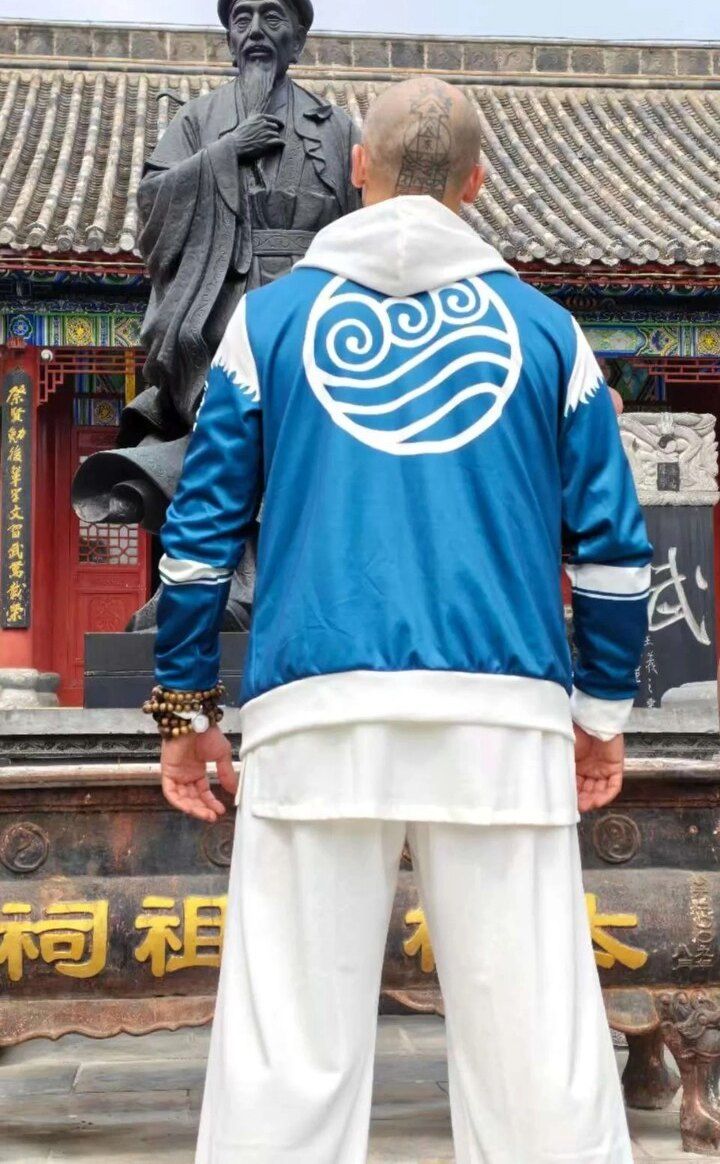
In 2026 Aang Willians lived for a month in Chenjiagou, Chen Village, in Henan province. He stayed at the Chen Bing Taiji Academy and learned Chen-style taiji from Master Chen Bing and the academy’s teachers.
Grandmaster Chen Bing 陳炳
Chen Bing (陳炳) was born in March 1971 in Chenjiagou. He is the only son of Chen Yonghe (陳永和), the elder brother of Grandmasters Chen Xiaowang (陳小旺) and Chen Xiaoxing (陳小星), and a direct descendant of Chen Wangting. He began training at 6 with his two uncles and later became Chen Xiaowang’s formal disciple.
He represents the 20th generation of the Chen family and is the eldest of that generation’s “Seven Dragons” (七龍). He was national push-hands champion three times in the 70 kg class (1996, 1998 and 2000) and overall champion of the Henan provincial wushu championships five times in a row. He graduated in wushu from the Shanghai University of Sport in 1997.
In 2007 he founded the Chen Bing Taiji Academy in Chenjiagou and has led it since. China recognises him as a national-level representative inheritor of taijiquan’s intangible cultural heritage.