Master AvatarAang Willians
·
停 Enter the site Português
The Scroll
The scroll: twelve chapters in ink on paper, from Song Shan to São Paulo, with subtitles and the sources of every line.
-
First, the paper. Nothing has been written yet.
-
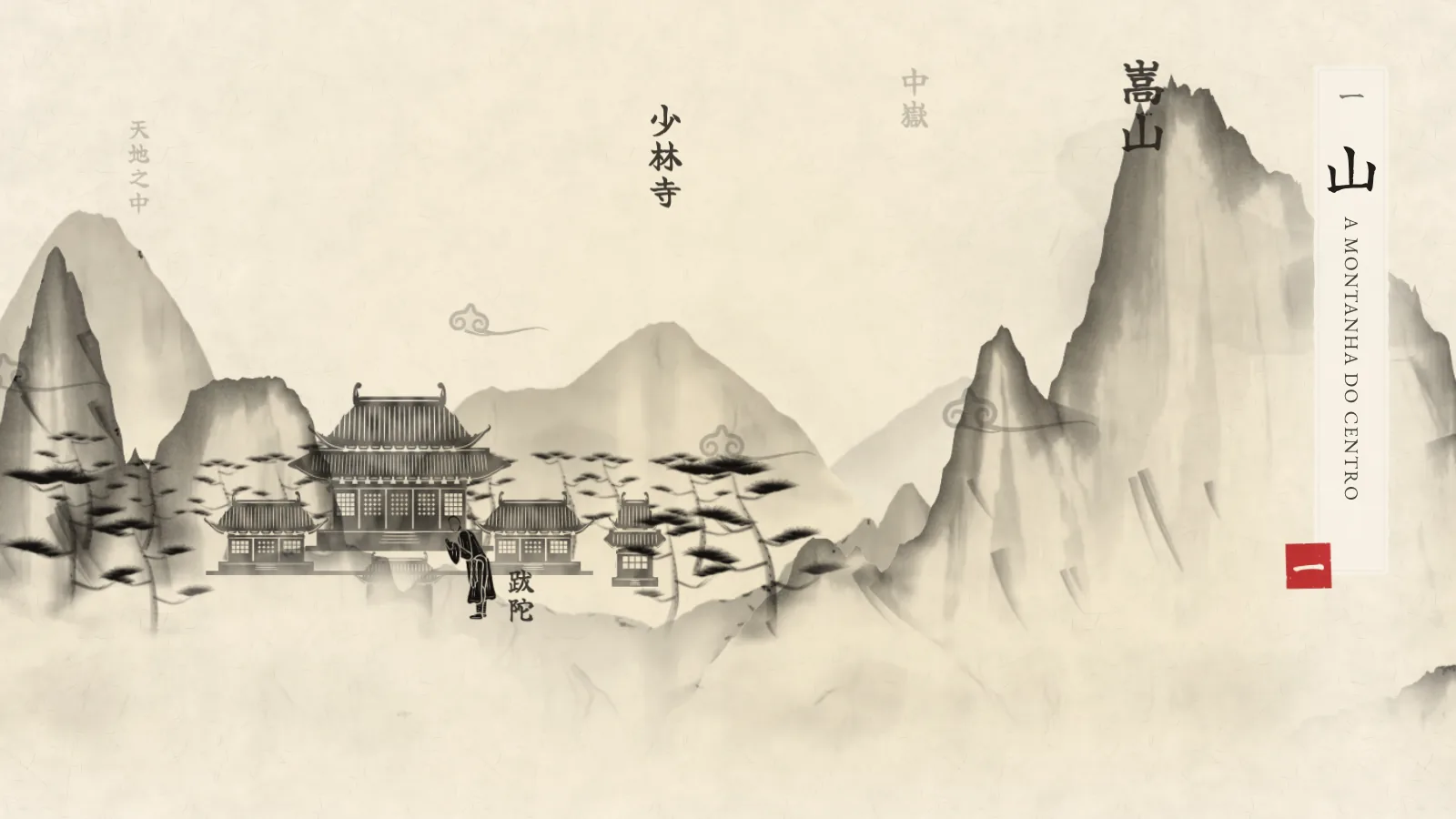
In the middle of China stands a mountain: Song Shan, the Central Peak.
History Wikipedia: Mount Song
-
The ancients called this land the centre of heaven and earth.
History whc.unesco.org: 1305worldheritagesite.org: 1305
-
On the west side stands Mount Shaoshi. That is what Shaolin means: the wood of Shaoshi.
History Wikipedia: Mount SongWikipedia: Shaolin Monastery
-
In 495 Emperor Xiaowen built a temple there for Batuo, a monk who came from India.
History Wikipedia: Shaolin MonasteryWikipedia: Batuoihchina.cn: 13786
-
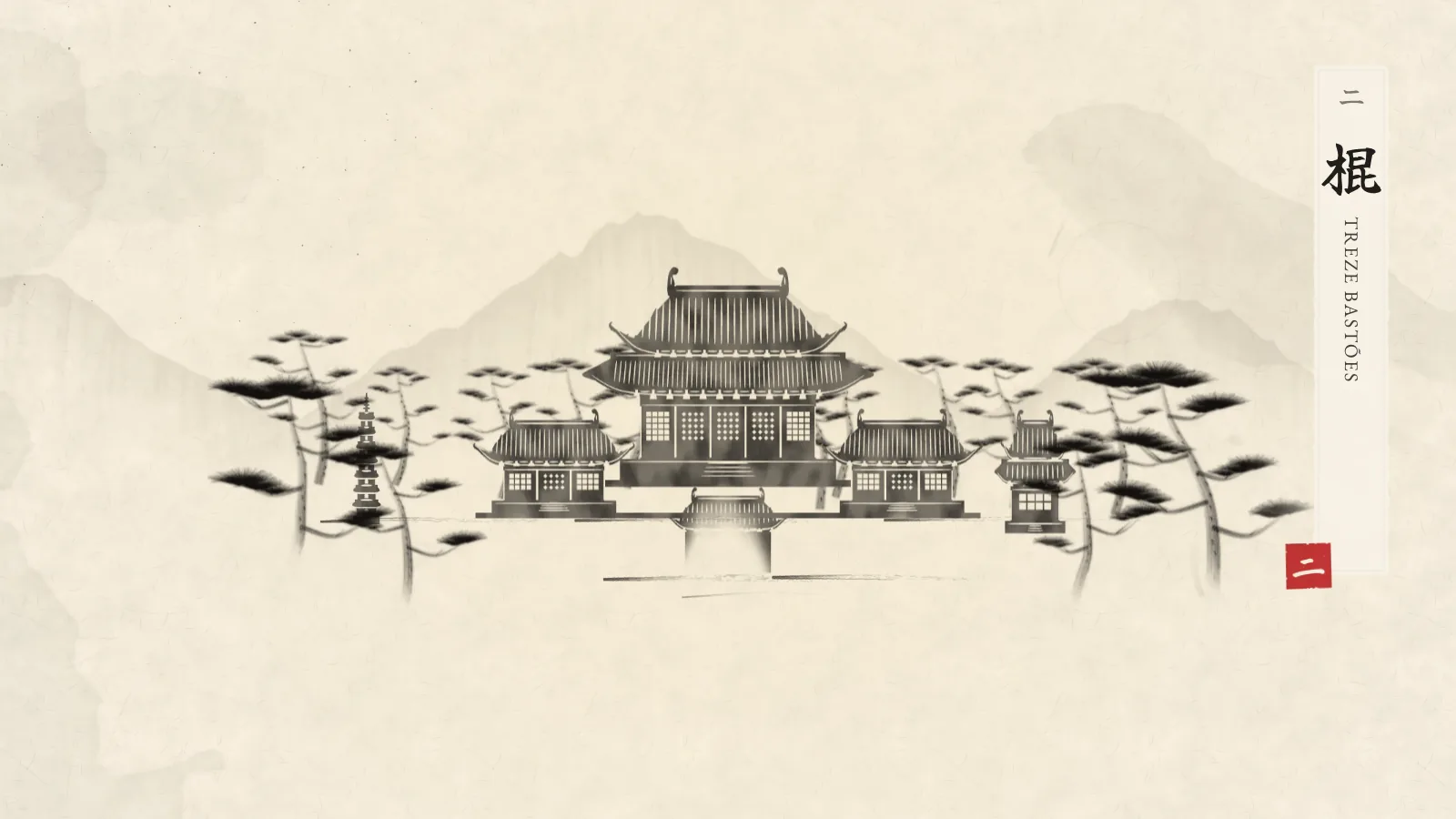
Buddhist texts remember the monk Sengchou for his staff and his empty hands.
History Wikipedia: Shaolin kung fuWikipedia: Batuo
-
In 621 monks of Shaolin captured Wang Renze, who had seized the temple's land.
History sohu.com: 920352422 121614014newworldencyclopedia.org: Shaolin Monastery
-
So they helped the prince Li Shimin. A stele from 728 keeps his letter and thirteen names.
History Wikipedia: Shaolin Monastery Stele
-
A saying about weapons: the staff is the ancestor of a hundred weapons.
History gcores.com: 182240
-
In 1928 a warlord's soldiers burned the temple. In the 1980s it was rebuilt.
History Wikipedia: Shaolin Monastery
-
Almost three centuries before the temple, a physician lived in Qiao: Hua Tuo.
History Wikipedia: Hua Tuo
-
He told his student Wu Pu: the body wants work and movement, but never to exhaustion.
Quotation Wikisource: 卷82下
-
Then the blood flows and illness cannot arise, just as a door hinge never rots.
Quotation Wikisource: 卷82下Wikisource: 卷29
-
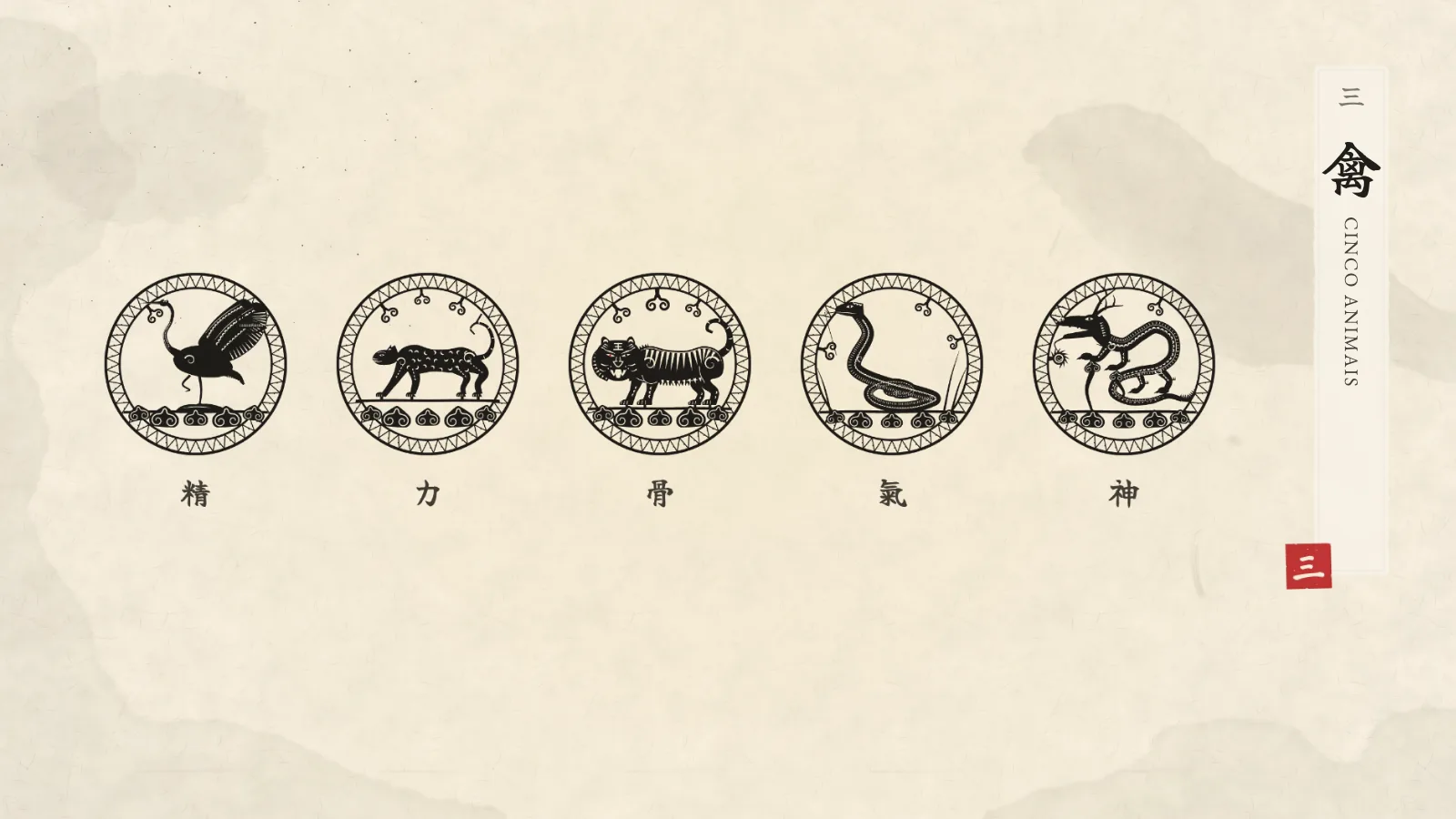
“I have a method: the frolics of the five animals. Tiger. Deer. Bear. Ape. Bird.”
Quotation Wikisource: 卷82下
-
Wu Pu practised it. Past ninety, his eyes and ears were clear and his teeth firm.
History Wikisource: 卷29
-
Later the south trained five others: dragon, snake, tiger, leopard and crane.
History shaolin.org: five-animal-setWikipedia: Animal styles in Chinese martial arts
-
Five animals to heal. Five to fight.
-
A book more than two thousand years old, the Yellow Emperor's Inner Classic,
History en.unesco.org: 438
-
says the ancients lived long because body and spirit stayed together.
Quotation Wikisource: 素問第一卷
-
“The sage does not treat the illness that has come. He treats it before it comes.”
Quotation Wikisource: 素問第一卷
-
“Digging a well when you are already thirsty: is that not too late?”
Quotation Wikisource: 素問第一卷
-
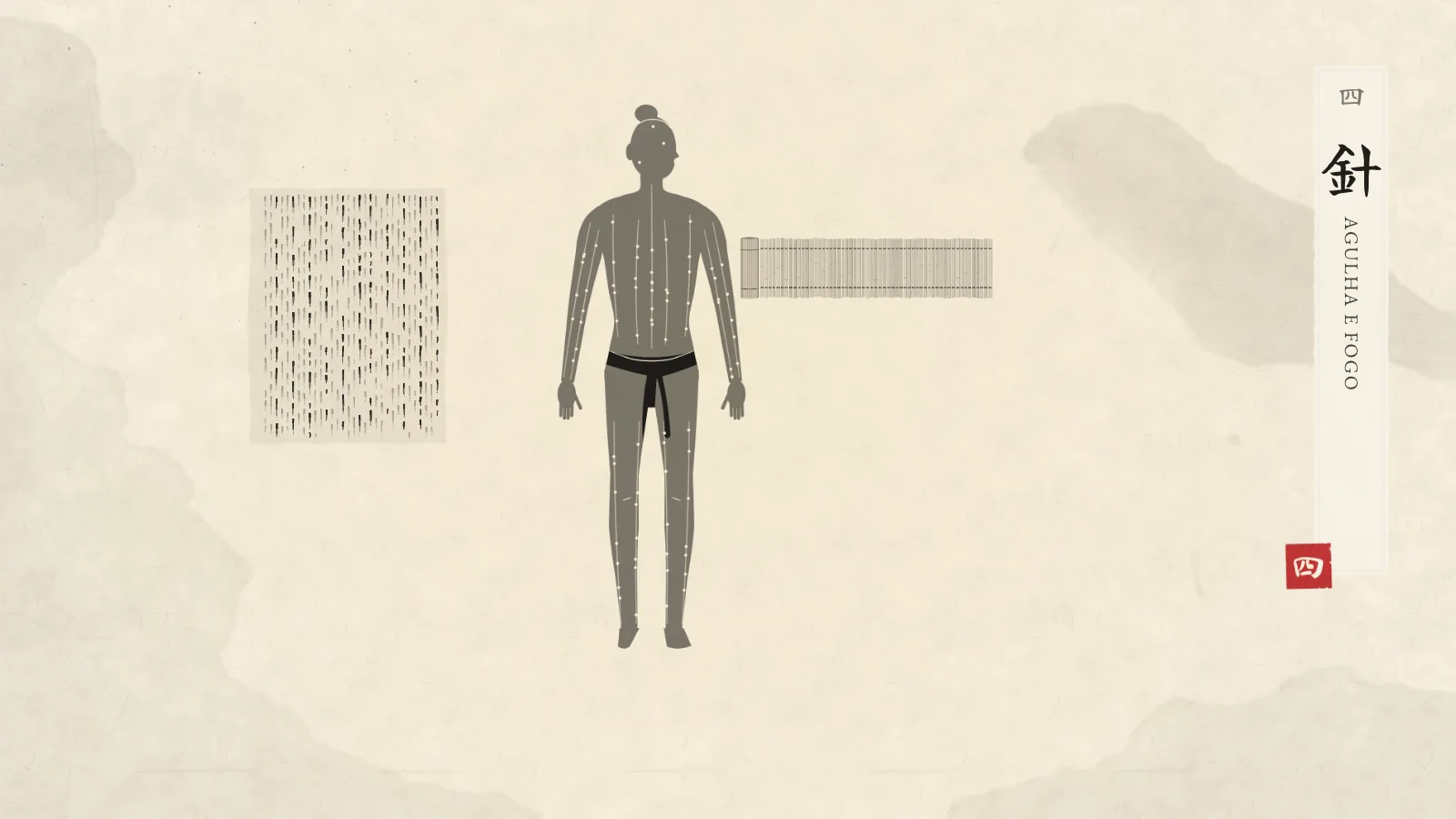
At Mawangdui, in a tomb closed in 168 BCE, silk texts describe eleven body channels.
History ncbi.nlm.nih.gov: PMC5337347
-
In 1027 the physician Wang Weiyi had two life-size bronze men cast.
History Wikipedia: Wang Weiyi (physician)
-
It is said that in exams the bronze was coated in wax, and the right point let out a drop.
Legend viewofchina.com: bronze-men
-
Around the year 340, Ge Hong wrote a book of remedies for emergencies.
History Wikipedia: Tu Youyouari.nus.edu.sg: 20331-108
-
Its title says “behind the elbow”: a book to carry in the sleeve, always at hand.
History ari.nus.edu.sg: 20331-108
-
It says: a handful of qinghao in water; wring it out and drink the juice.
Quotation Wikipedia: Tu Youyou
-
In 2015 Tu Youyou won the Nobel Prize. Ge Hong's recipe taught her not to boil the plant.
History Wikipedia: Tu Youyou
-
Sun Simiao, the King of Medicine: the great physician does not weigh rank, wealth or age.
Quotation Wikipedia: Sun Simiao
-
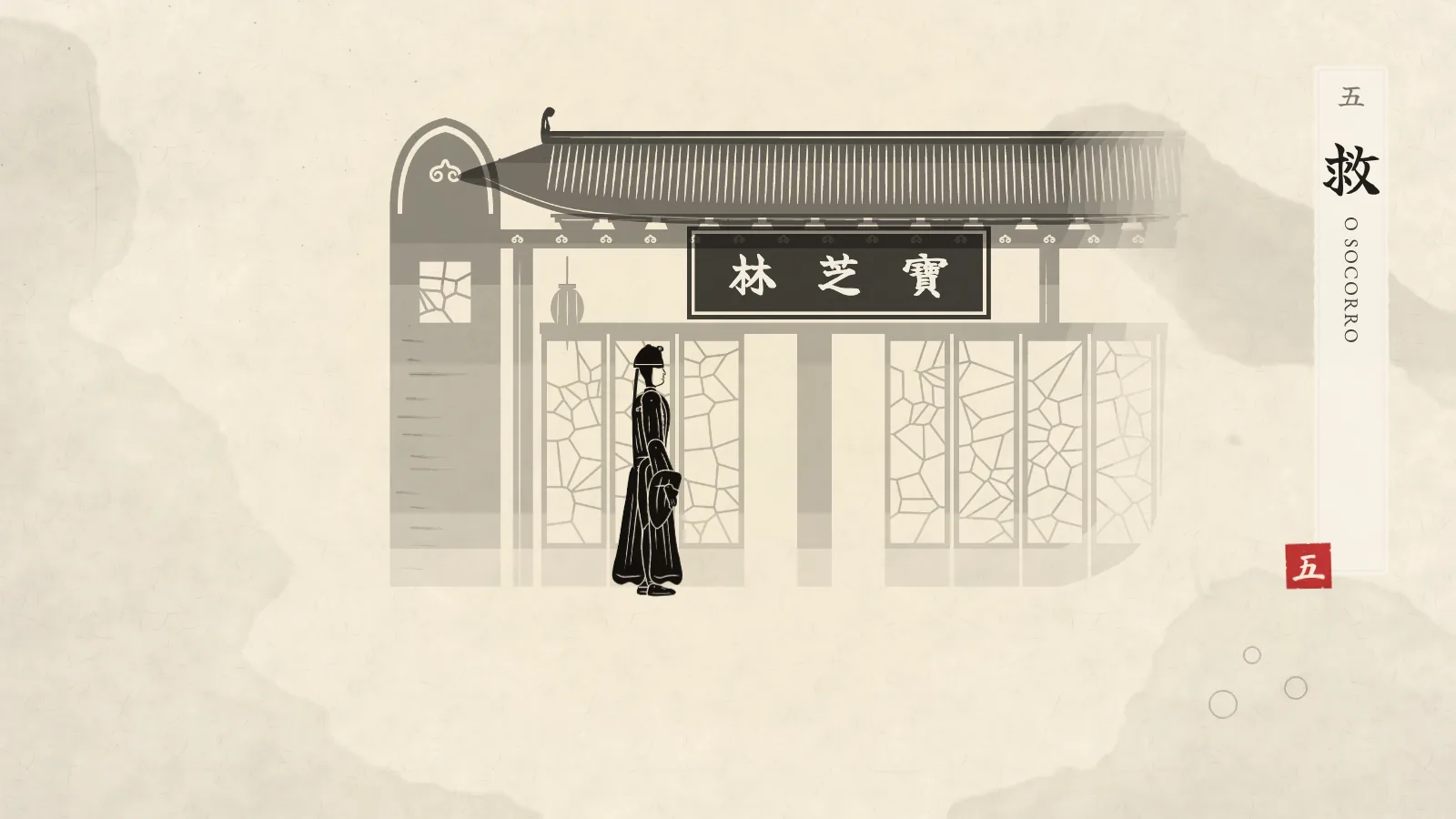
In the south, kung fu masters treated falls and blows: 跌打 medicine, “fall and strike”.
History Wikipedia: Dit dawords.hk: 跌打
-
In 1886, in Canton, Wong Fei-hung opened his clinic. His greatest fame was as a physician.
History Wikipedia: Wong Fei-hung
-
Another monk came from the west: Damo. A book of 547 places him at the temples of Luoyang.
History Wikipedia: BodhidharmaWikipedia: A record of Buddhist monasteries in Luoyang
-
Tradition tells that Emperor Wu asked him how much merit his temples had earned him.
Legend Wikipedia: Bodhidharmatreetopzencenter.org: 886
-
“None,” said Damo. Then he crossed the great river standing on a single reed.
Legend Wikipedia: Bodhidharmachinesenotes.com: 35520metmuseum.org: 73645
-
The conversation was first written down in 952, four centuries later.
History Wikipedia: Bodhidharma
-
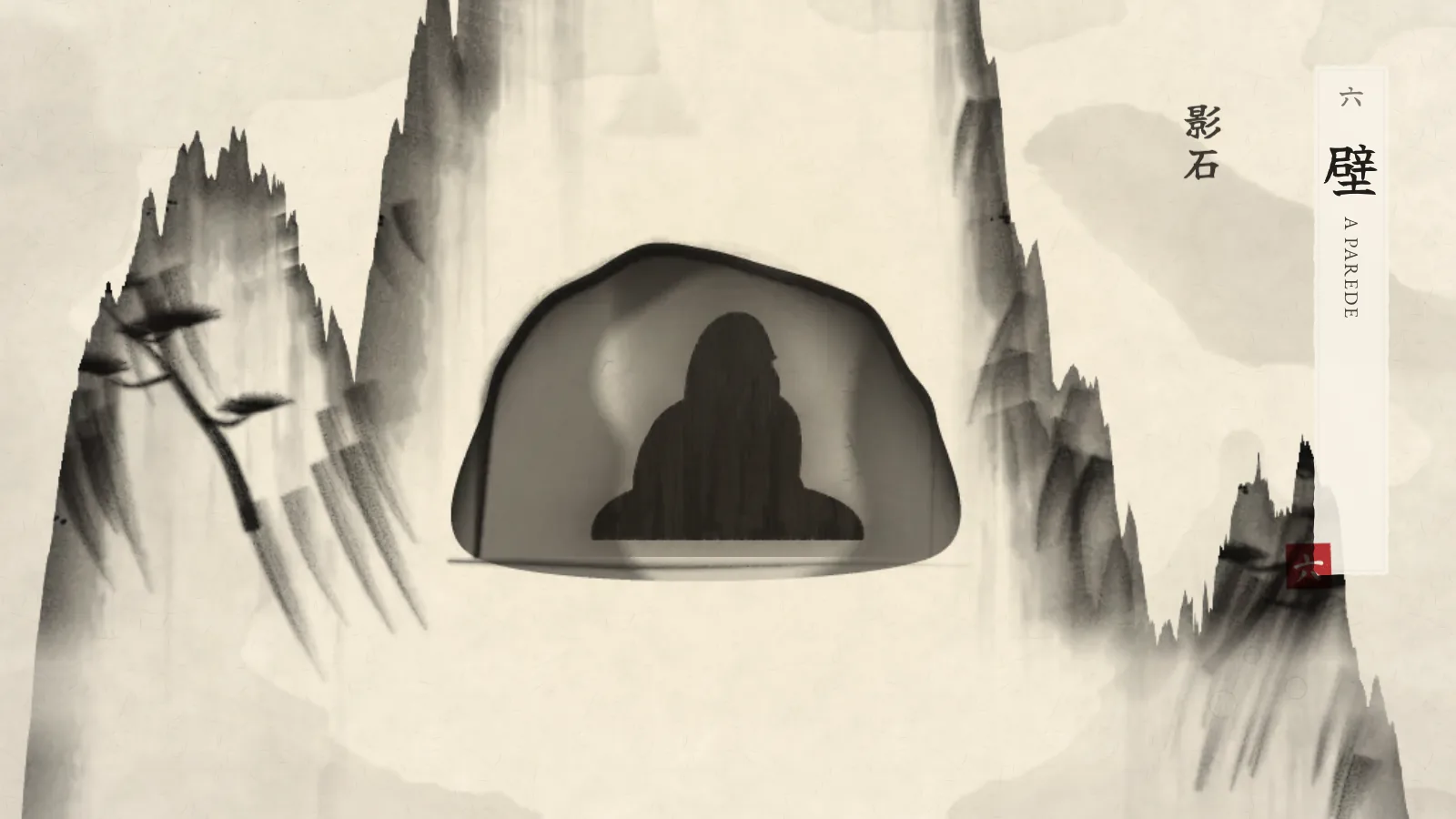
Tradition tells that he sat in a cave above Shaolin, facing a wall of stone.
Legend Wikipedia: BodhidharmaWikipedia: Shaolin Monastery
-
Nine years. Without speaking.
Legend Wikipedia: Bodhidharma
-
It is told that his shadow stayed printed on the stone.
Legend faena.com: the-legend-of-bodhidharma-and-his-shadow-impressed-in-the-shaolin-cavesohu.com: 414249523 299181
-
The early texts say “wall-gazing”. A wall of stone, or a mind as steady as one?
History encyclopediaofbuddhism.org: Bodhidharmaprojects.mcah.columbia.edu: 4823terebess.hu: bodhidharma-eng
-
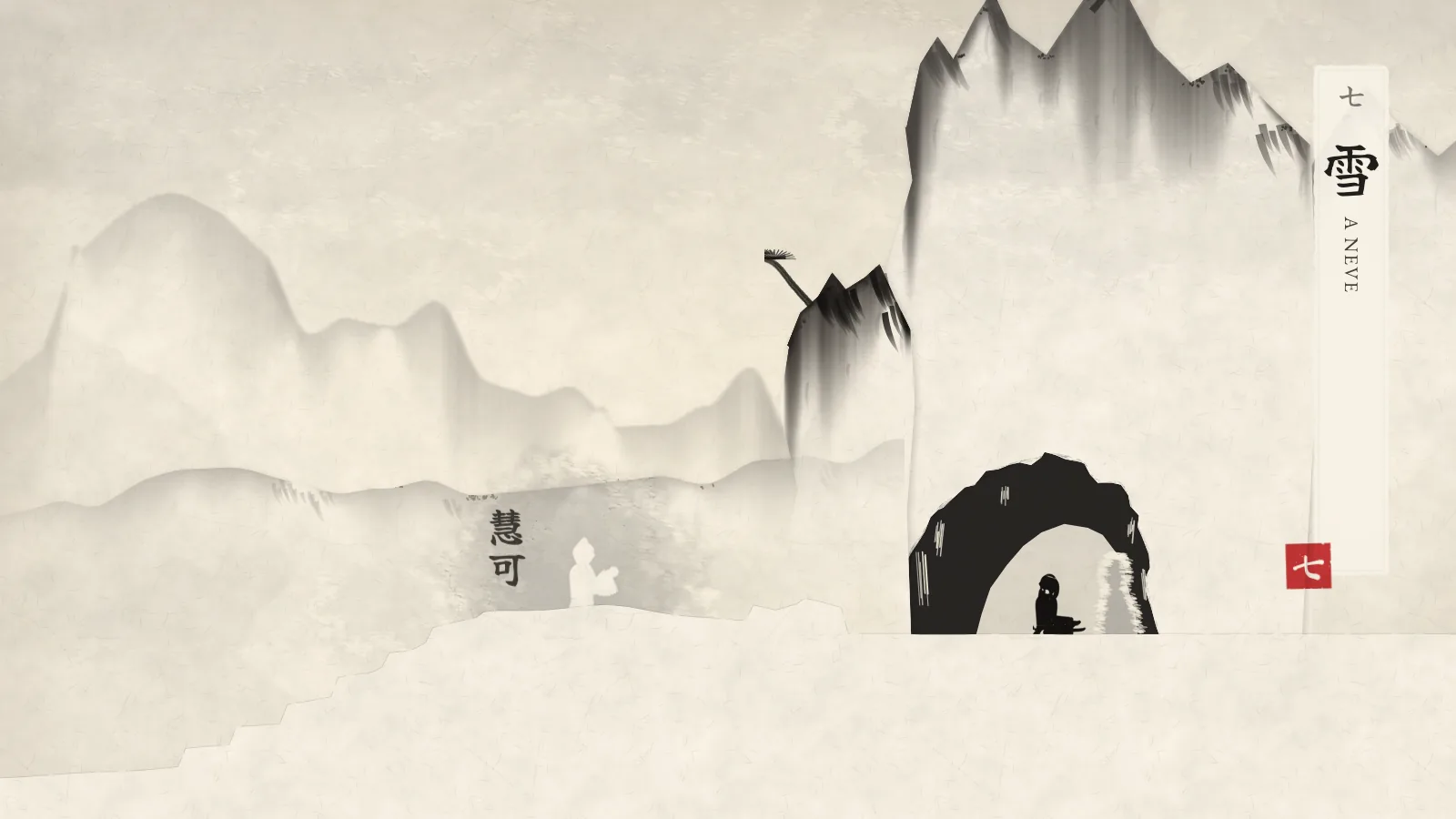
Tradition tells that a scholar, Shenguang, climbed to the cave and asked to be taught.
Legend Wikipedia: Dazu Huike
-
Damo did not turn around. Shenguang stood in the snow all night.
Legend Wikipedia: Dazu Huike
-
By morning, the snow reached his waist.
Legend Wikipedia: Dazu Huike
-
“My mind is not at peace. Master, pacify it.”
Legend treetopzencenter.org: gateless-gate-case-41-bodhidharmas-mind-pacifying
-
“Bring me your mind, and I will pacify it.”
Legend treetopzencenter.org: gateless-gate-case-41-bodhidharmas-mind-pacifying
-
“I have searched, and I cannot find it.” “There. I have pacified your mind.”
Legend treetopzencenter.org: gateless-gate-case-41-bodhidharmas-mind-pacifying
-
He received the name Huike and became the second patriarch of Chan.
Legend Wikipedia: Dazu Huike
-
In the book Liezi, the archer Fei Wei tells Ji Chang: “First learn not to blink.”
Text ctext.org: tang-wenzdic.net: 懸虱en.5000yan.com: piercing-flea-splitting-willowedb.gov.hk: KS3 03
-
Ji Chang lay two years under his wife's loom, eyes on the treadle as it rose and fell.
Text ctext.org: tang-wenzdic.net: 懸虱en.5000yan.com: piercing-flea-splitting-willowedb.gov.hk: KS3 03
-
“Now learn to see the small as large.” He hung a louse on a hair in his window.
Text ctext.org: tang-wenzdic.net: 懸虱en.5000yan.com: piercing-flea-splitting-willowedb.gov.hk: KS3 03
-
In three years it looked as big as a wheel. His arrow went through it; the hair held.
Text ctext.org: tang-wenzdic.net: 懸虱en.5000yan.com: piercing-flea-splitting-willowedb.gov.hk: KS3 03
-
In the Zhuangzi, a king's fighting rooster. Ten days: proud. Twenty: it leaps at shadows.
Text Wikisource: 達生
-
Forty: others crow and it does not move. It looks carved of wood. The others run.
Text Wikisource: 達生
-
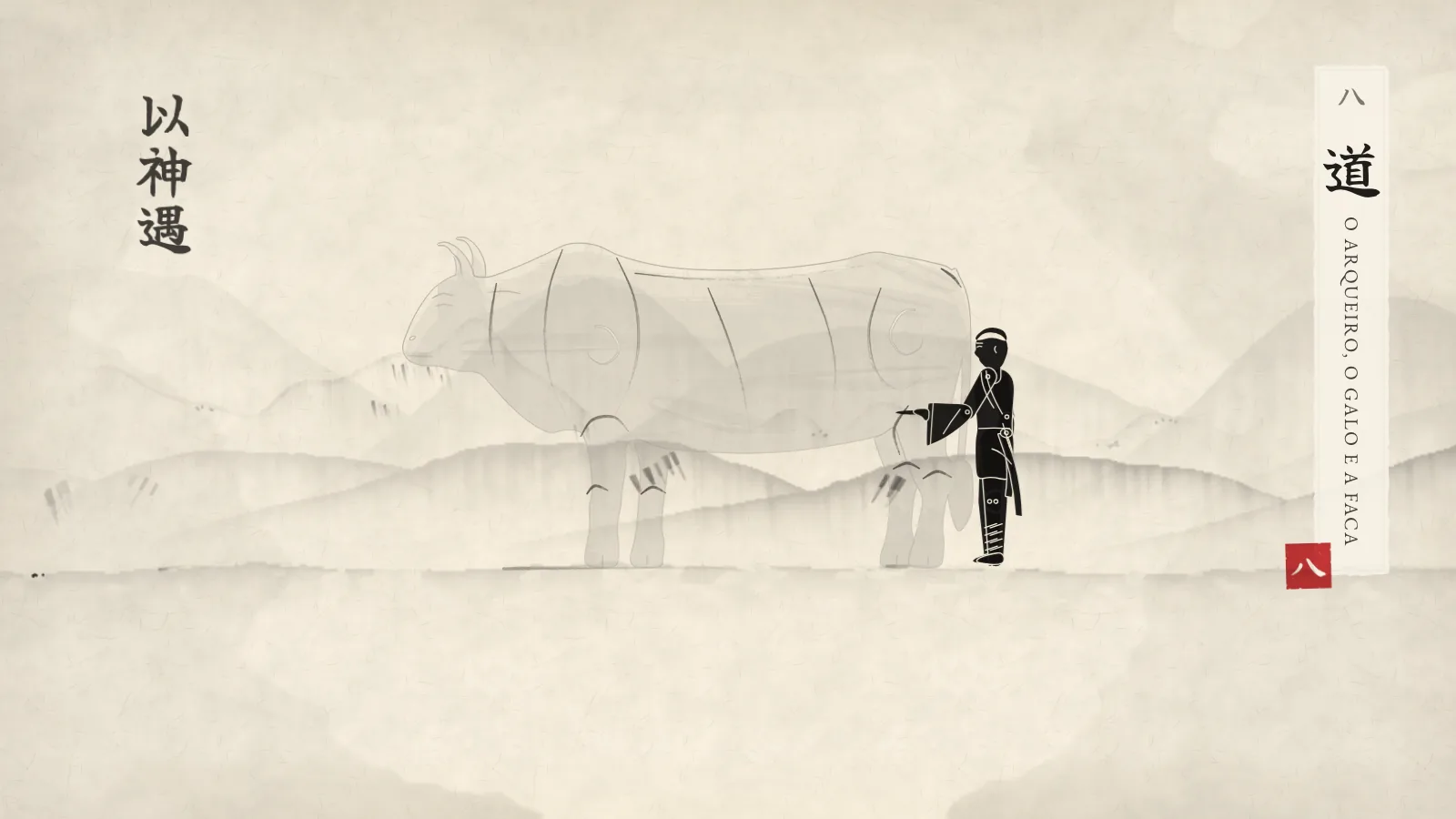
In the same book, Cook Ding: “After three years I no longer saw the whole ox.”
Text Wikisource: 養生主chinesenotes.com: zhuangzi003
-
“Now I meet it with my spirit, not with my eyes. My knife is nineteen years old.”
Text Wikisource: 養生主chinesenotes.com: zhuangzi003
-
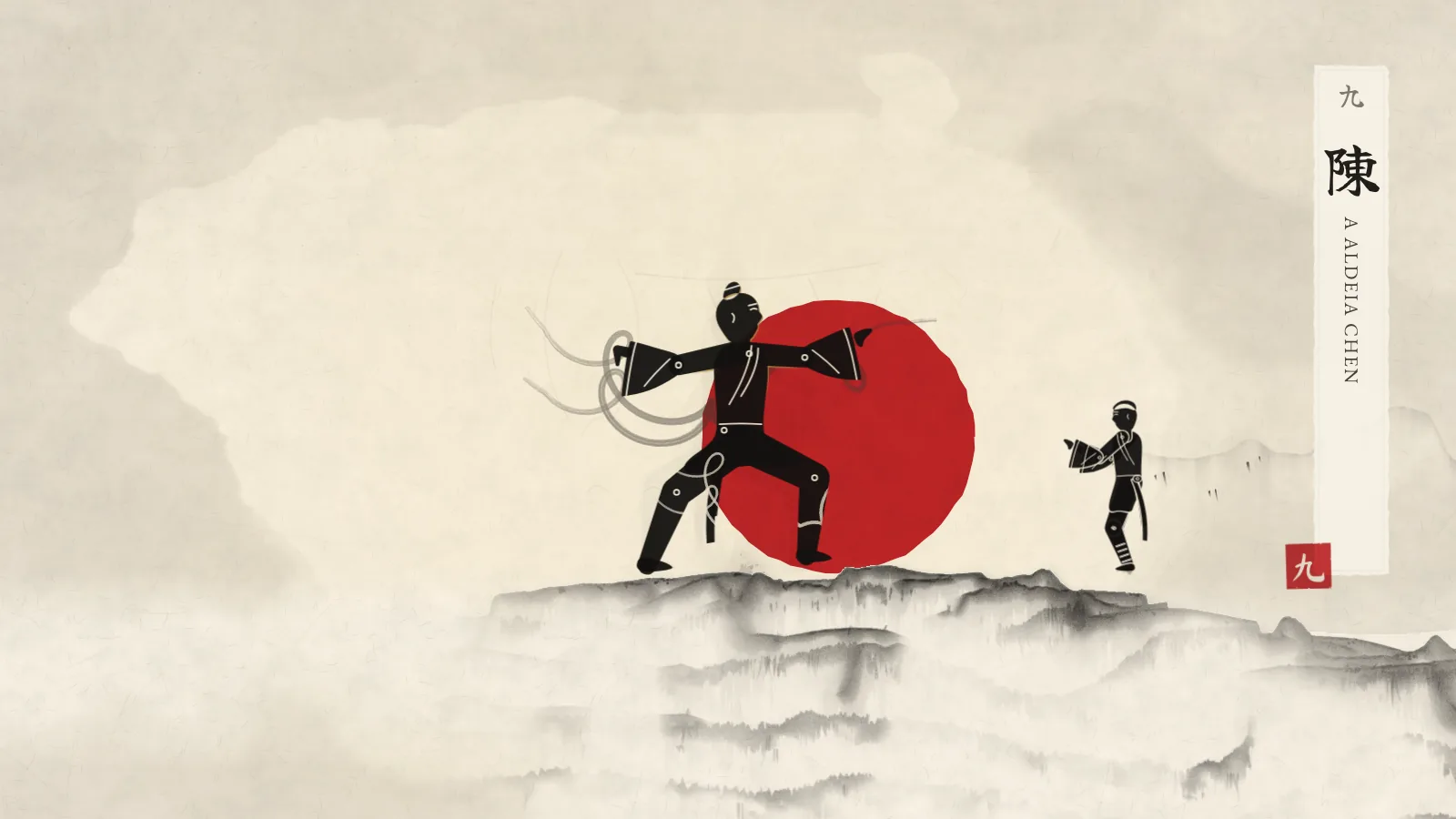
North of Song Shan runs the Yellow River. On the far bank lies the Chen family village.
History chenbing.org: origin-of-tai-chiWikipedia: Chen-style tai chi
-
Chen Wangting commanded the county garrison. When the Ming fell in 1644, he came home.
History Wikipedia: Chen-style tai chiWikipedia: Chen Wangting
-
The family tells that he joined his experience of war to the body's channels and daoyin.
History Wikipedia: Chen WangtingWikipedia: Chen-style tai chi
-
Zhou Dunyi wrote: movement at its extreme becomes stillness; stillness moves again.
Quotation crta.info: 太極圖說與通書 - D6.12hk01.com: 168264
-
In 2020 UNESCO inscribed taijiquan as heritage of humanity.
History ich.unesco.org: taijiquan-00424
-
Today a master from São Paulo studies Chen style in this village.
Source: Pak Shao Lin and the master
-
In 1936, in Taishan in southern China, Chan Kowk Wai was born.
History Wikipedia: Chan Kowk-wai
-
Taishan calls itself the first home of the overseas Chinese.
History Wikipedia: Taishan, Guangdong
-
He began training at four. In 1949 his family moved to Hong Kong.
History Wikipedia: Chan Kowk-wai
-
Under many masters he studied Northern Shaolin, Yang taiji, bagua, xingyi and Choy Li Fut.
History Wikipedia: Chan Kowk-wai
-
In 1960 he crossed the ocean to Brazil and began to teach in São Paulo.
History Wikipedia: Chan Kowk-waiperiodicos.uem.br: 7765
-
In 1973 he founded his academy. In 1979 Gilmar Dantas became his disciple.
Source: Pak Shao Lin and the master Wikipedia: Chan Kowk-wai
-
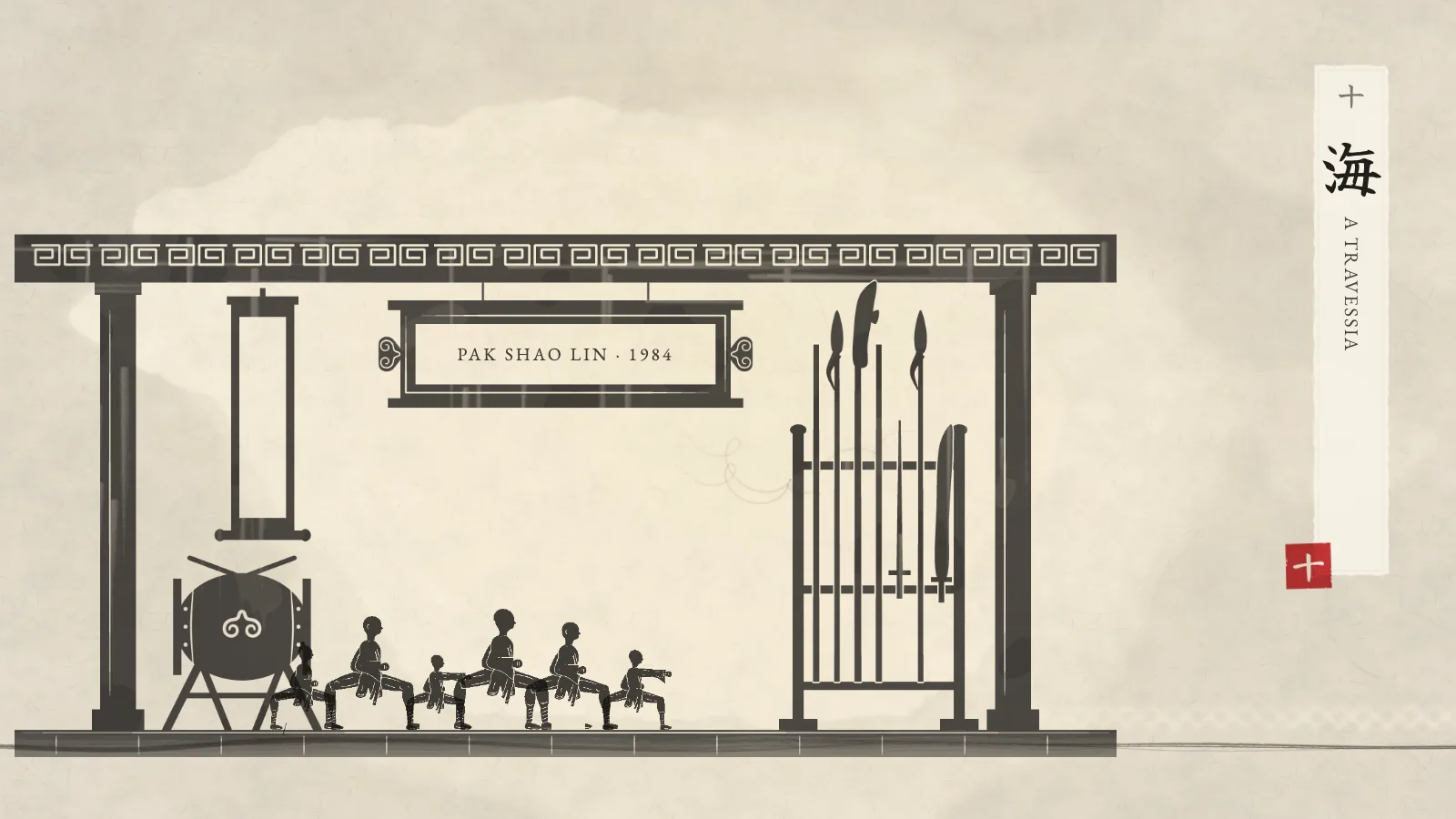
In 1984 Gilmar founded Pak Shao Lin in São Paulo: the Little Forest of the North.
Source: Pak Shao Lin and the master
-
Grandmaster Chan Kowk Wai died in São Paulo in 2022, aged 85.
History Wikipedia: Chan Kowk-wai
-
Willians Correia was born in São Paulo in 1981. He has trained since the age of seven.
History actionkungfu.com.br: equipeYouTube: pj2mKW1Fyeo
-
Brazilian, with his heart in the Chinese martial arts.
Source: Pak Shao Lin and the master
-
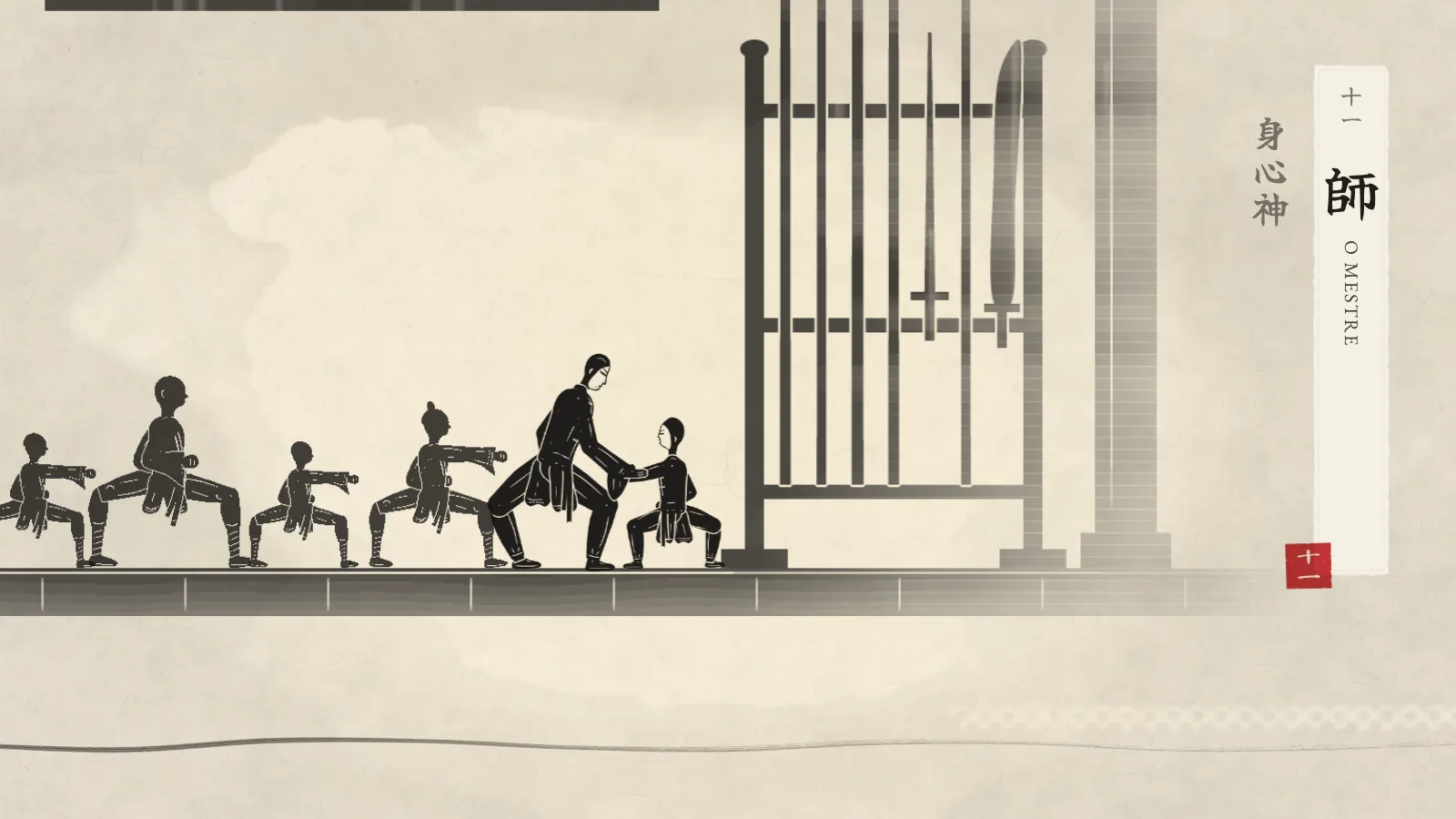
A disciple of Gilmar Dantas, he became a master at Pak Shao Lin in 2018.
Source: Pak Shao Lin and the master pakshaolin.org: histsifuwil
-
He has trained with many masters, in Brazil and in China.
Source: Pak Shao Lin and the master YouTube: hi0id49GpHAvakinha.com.br: 5326998
-
He is a kung fu teacher, a stunt performer and an actor. And a civil firefighter.
History actionkungfu.com.br: equipe
-
In Brazil a civil firefighter prevents and fights fires and gives first aid.
History planalto.gov.br: L11901vriconsulting.com.br: ocupacao
-
The sage treats illness before it comes. The firefighter works before the fire.
History Wikisource: 素問第一卷planalto.gov.br: L11901
-
Mencius wrote of neighbours who keep watch together and support one another in sickness.
Quotation chinakongzi.org: page47chinesenotes.com: 108564
-
In 597 BCE, after a great victory, King Zhuang of Chu
Quotation zdic.net: 武aisixiang.com: 167843
-
refused to pile up the enemy dead as a monument.
Quotation zdic.net: 武aisixiang.com: 167843
-
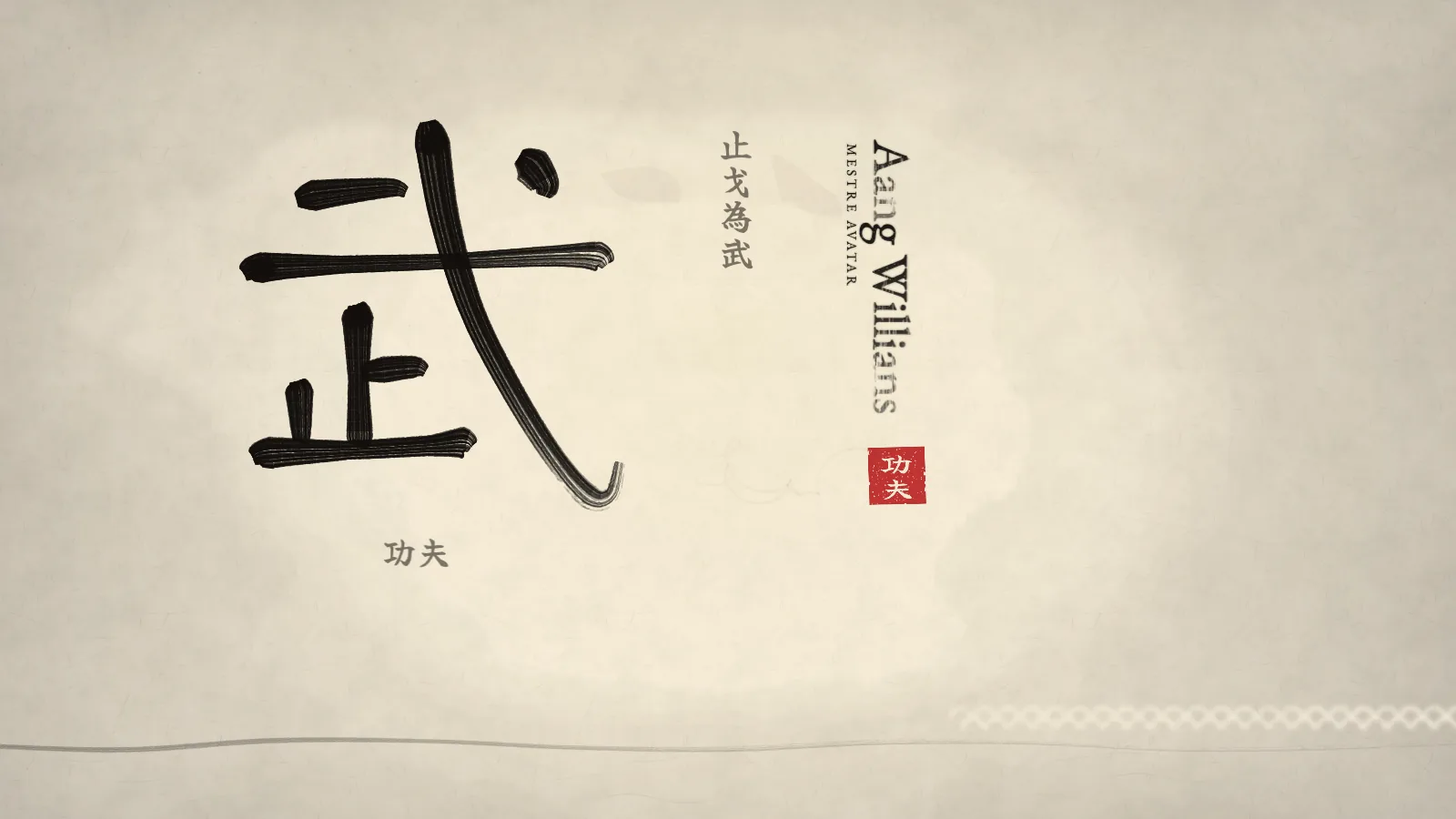
“Look at the character for martial,” he said. “It joins stop and spear.”
Quotation zdic.net: 武aisixiang.com: 167843
-
“The martial stops violence, puts weapons away and gives the people peace.”
Quotation zdic.net: 武aisixiang.com: 167843
-
The word 功夫, kung fu, first meant skill built from time and hard work.
History Wikipedia: Kung fu (term)
-
“My life is Kung Fu of Body, Mind and Soul.” — Master Avatar Aang Willians
Quotation YouTube: pj2mKW1Fyeo


